Journal · Source literacy
Finding local vape disposal information
How to locate an official contact and confirm acceptance before making a trip.
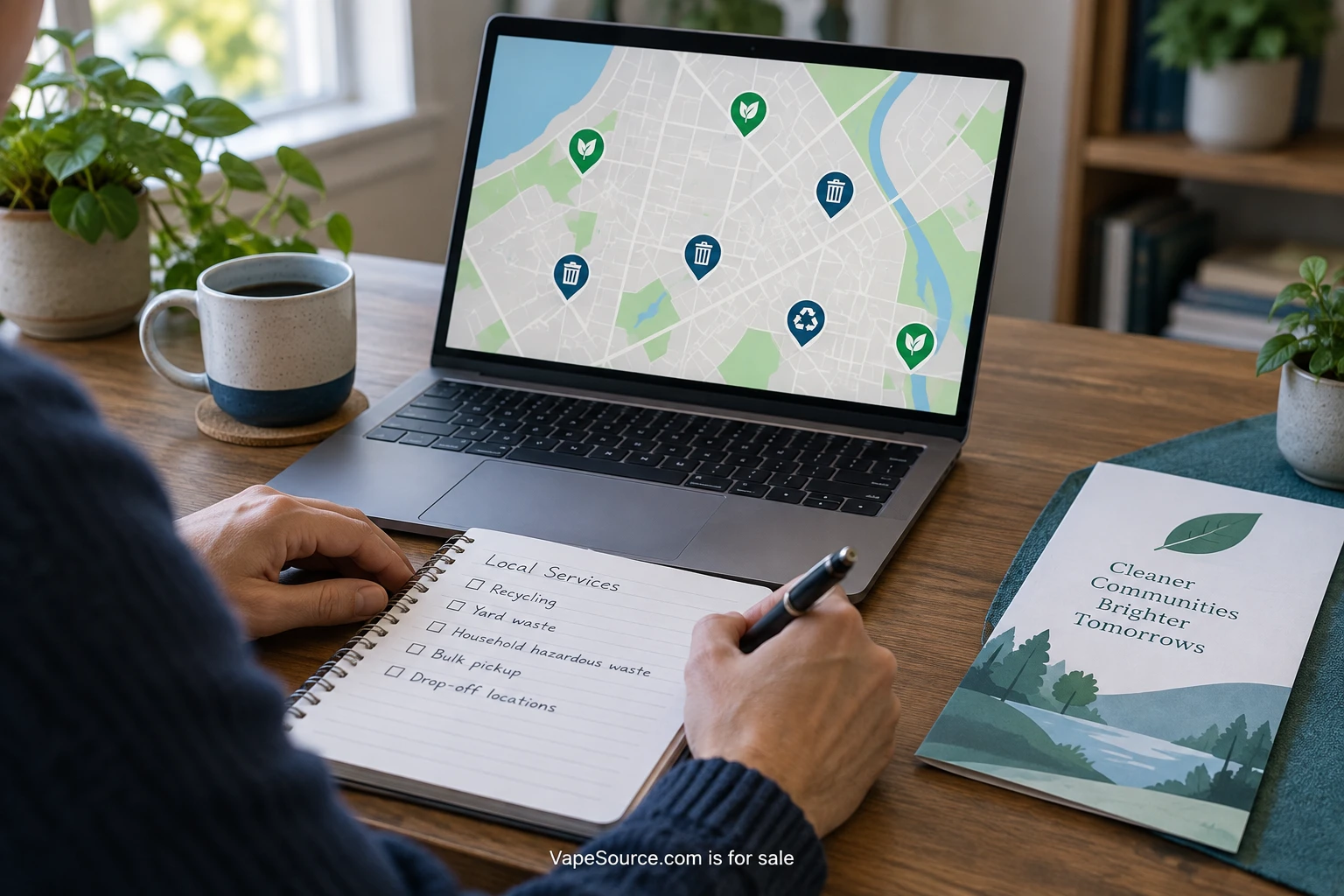
Finding a nearby address is only one part of a vape disposal search. You also need to know whether the program serves your area, accepts the particular waste category and requires an appointment. A listing for electronics or batteries may leave those questions unanswered. The most useful search ends with current information from the responsible waste authority or receiving facility, not just a pin on a map.
This guide is for adults looking for official local information about household waste. It does not provide handling or transport instructions for a particular item. Those instructions should come from the authority responsible for the collection program. If your question concerns business waste, identify that at the outset; a program available to residents may have different eligibility rules for commercial material.
Start with the correct local authority
Use your city or county government's official website to identify its waste or household hazardous waste service. Search within that site for e-cigarettes, vapes and household hazardous waste. A general search engine can help locate the page, but open the official result and confirm which jurisdiction it serves. Similar place names and regional programs can make a plausible result easy to misread.
The EPA household hazardous waste overview explains the role of local programs and points residents toward local environmental or solid waste agencies. Use that as a route to the responsible authority. It does not establish the rules for every facility, and it does not replace an answer about your specific waste category.
Write down the authority's name and the official page you found. Note whether the page describes a permanent collection center, a periodic event or a referral to another organization. The receiving site may be operated by a different body from the government page that lists it. Follow that chain far enough to find the current acceptance information, while keeping the original official referral available for reference.
Describe the category accurately
When reading a page or asking a question, distinguish nicotine e-cigarette waste from cannabis-related waste. Do not assume that an instruction written for one category also applies to another. If you do not know the relevant category, tell the authority what information you have and ask which service should advise you. There is no need to guess or use a broad label that hides the uncertainty.
The EPA consumer fact sheet on vape disposal warns against putting e-cigarettes in ordinary trash or recycling and directs people to household hazardous waste collection. Its explanation concerns hazards including batteries and nicotine. Read it as general consumer guidance in that scope. Confirm local acceptance separately, and ask explicitly about cannabis-related waste when that is the category involved.
A local page may use broad terms such as electronics, small batteries or chemicals. Those labels alone may not answer the complete-item question. Ask whether the program accepts the item as described and where its current instructions are published. Avoid treating a collection logo, an old community post or a generic recycling symbol as evidence of acceptance.
Check eligibility before opening a route planner
Look for residency requirements and the service boundary. A facility can be physically close while serving a different jurisdiction. The page may require proof of residence, an appointment or registration for a particular event. Record those requirements from the official source. If the wording is ambiguous, confirm it before planning the visit.
Check the date as well as the weekday and opening hours. Search results often preserve pages for past events. A page with a collection date from last year should not be treated as this year's schedule. A current government page may link to a calendar maintained elsewhere, so inspect the actual event entry rather than relying on the introductory paragraph alone.
For business waste, ask for the commercial program or the authority that handles that inquiry. Do not present household eligibility as permission for a business to use the same service. The distinction should be part of the first message, along with the type of information you are seeking. That helps the authority route the question without a long exchange based on the wrong program.
Ask a question that can receive a clear answer
A concise message could read: I am a resident of this service area and need the current disposal route for this waste category. Does your household program accept it, is an appointment needed, and where can I find your preparation and transport instructions? If the material is cannabis-related, say so directly. This is a request for the correct official route, not a request for the staff member to infer what you mean by electronics.
Keep the answer or the link in a note you can retrieve later. Record the date of the response, the program name and any conditions that apply. You do not need to collect personal information about the employee. An official email response or a current public instruction page is easier to revisit than a memory of a brief call.
If the authority refers you to another facility, confirm the receiving facility's acceptance too. A referral can identify the likely route without settling availability on the day you intend to visit. Ask the receiving program about the same category and eligibility details. This additional check is particularly useful when the first page provides a broad directory rather than a material-specific instruction.
Handle conflicting pages by asking the authority
Suppose an illustrative county page lists electronics collection, while the linked facility page excludes certain items. Do not choose the more convenient instruction and ignore the conflict. Contact the program, explain the two pages and request the current rule for your category. Keep the links together so the staff member can see exactly what needs clarification.
An unofficial directory can help you discover a contact, but it should not overrule the authority's current instructions. Reviews, social posts and old flyers may describe a different event or a previous policy. If you cannot confirm acceptance, mark the route as unconfirmed in your own notes. That is a useful result because it prevents an uncertain listing from becoming a confident plan.
Leave handling questions with the receiving program
Follow the authority's directions for preparation and transport, and ask for clarification where needed. Do not improvise by dismantling an item or assuming that generic battery advice covers the whole situation. If an item is damaged or otherwise presents a concern, describe that concern to the relevant service before taking action. A routine collection schedule may not answer that question.
Your completed note should contain six things: the authority, the official source, the waste category discussed, eligibility, acceptance status and the date checked. Add appointment details and the link to official instructions if the program requires them. This gives you a practical record of what has actually been confirmed, with a clear distinction between a possible destination and a verified route.
Before traveling, revisit the current schedule for cancellations or changes. If the route remains unclear, return to the local waste authority and ask which organization can provide a definitive answer. The aim is a short, reliable chain from your question to the responsible program. A few precise checks can be more useful than collecting a long list of nearby places that may not accept the material.